
Wildlife Photography from the Farne Islands in North-East England
The Northumberland coast has it all! Eider ducks, guillemots, puffins, seals and terns. All except a partridge in a pear tree!
As a nature and wildlife photographer, when the opportunity presents itself to travel to the Farne Islands in Northumberland in the company of friends - one of which happens to work for the RSPB - you go! So fortunate was I this May bank holiday weekend. Care to see a few pics?
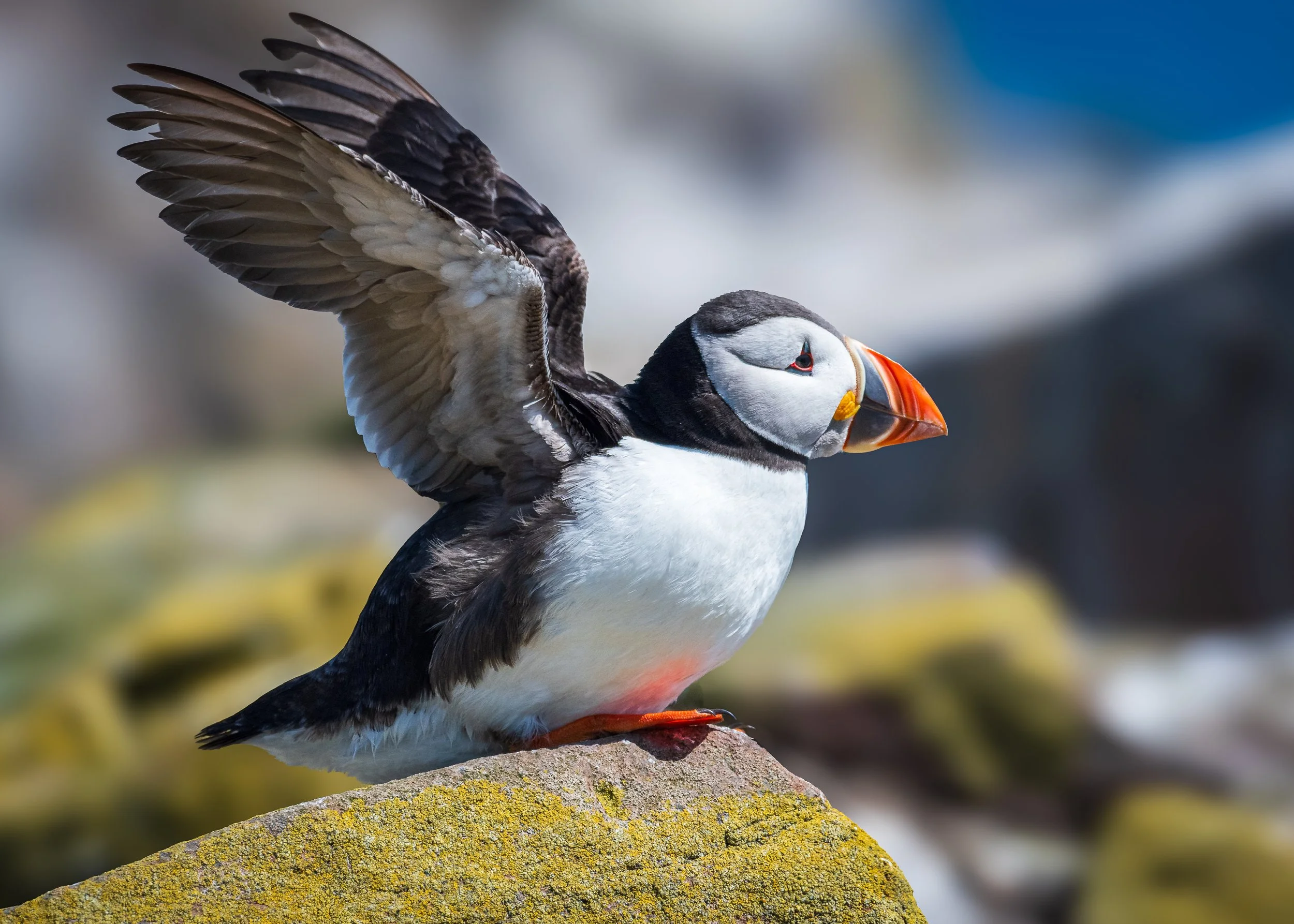
Cast a Light Photography© by Matthew Shaw
Nikon D500, Nikon AF-S Nikkor 200-500 f/ 5.6 ED VR
500mm, 1/4000 sec, f/7.1, ISO 720, processed in Adobe Lightroom
My wife and I have just returned from a brilliant holiday on the outskirts of Berwick-upon-Tweed.
We stayed at Haven Haggerston Castle Holiday Park. (Cue nostalgia of many happy family getaways to caravan sites)
The park was ideally located for discovering plentiful open-air activities in the nearby vicinity and the site itself was home to abundant wildlife - birds in particular - thanks to its 7 lakes!
Cameras at the ready!
Whilst in Northumberland, we visited “Lindisfarne (also known as Holy Island)…a tidal island off the northeast coast of England, famous for its 7th-century Celtic Christian heritage, medieval priory ruins, and 16th-century castle. Accessible via a paved causeway, it becomes entirely cut off from the mainland twice daily by the North Sea tides.” Source: Wikipedia.
Lindisfarne offered panoramic views as far as the eye could see. As we sat together on a hillside besides the castle grounds, the warm sun and welcome breeze calmed our minds and the Farne Islands waved at us from across the flat-calm water.
We also spent a day at The Alnwick Garden admiring its glorious grounds. With beautiful botanicals and lucious landscapes of green, it was truly an outdoor photographer’s paradise.
The highlight of the trip: the Farne Islands
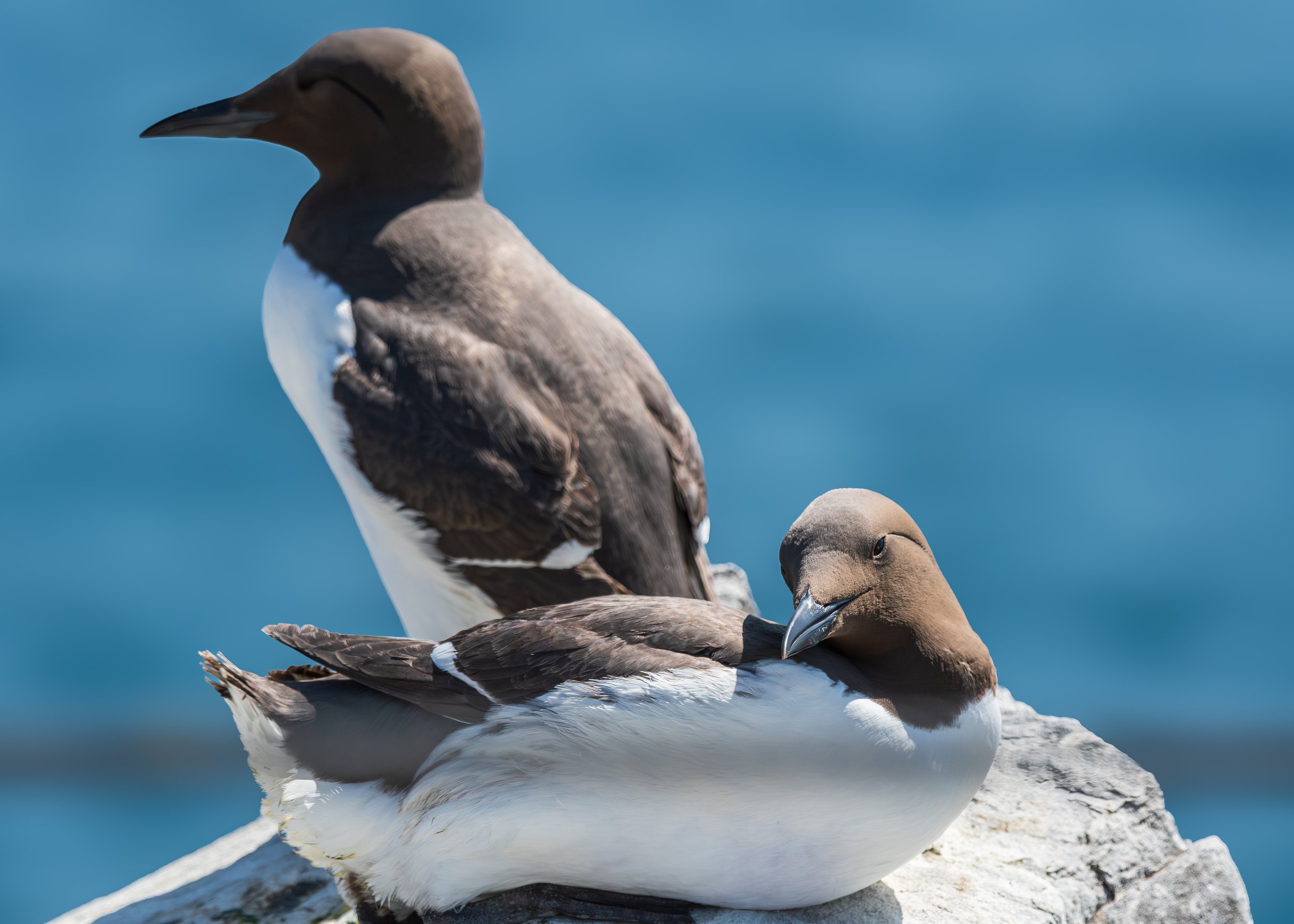
Cast a Light Photography© by Matthew Shaw
Nikon D500, Nikon AF-S Nikkor 200-500 f/ 5.6 ED VR
290mm, 1/4000 sec, f/7.1, ISO 720, processed in Adobe Lightroom
We travelled with Billy Shiel’s Boat Trips. The skipper was incredibly skilled and managed to manoeuvre the boat around 360 degrees to allow photographers, videographers and enchanted eyes on all sides of the vessel a chance to behold the flocks of birds.
For about an hour, we meandered the jagged rock faces, lighthouses and keeper cottages before landing on the island closest to shore for a duration of 1 hour. The 60 minutes flew by! But it did provide ample time to get some shots in the bag.
May to July is a great time to sight puffins as it coincides with their breeding season. “During this period, the Farne Islands host up to 23 species of birds, including around 40,000 pairs of puffins. Source: National Trust. It is for this annual spectacle that puffins showcase their larger and more vibrant orange beaks.
Besides puffins, it is highly likely that you will spot seals and many species of seabird, including eider ducks, guillemots and terns. But the puffins were my favourite. I got some puffin socks as a souvenir.
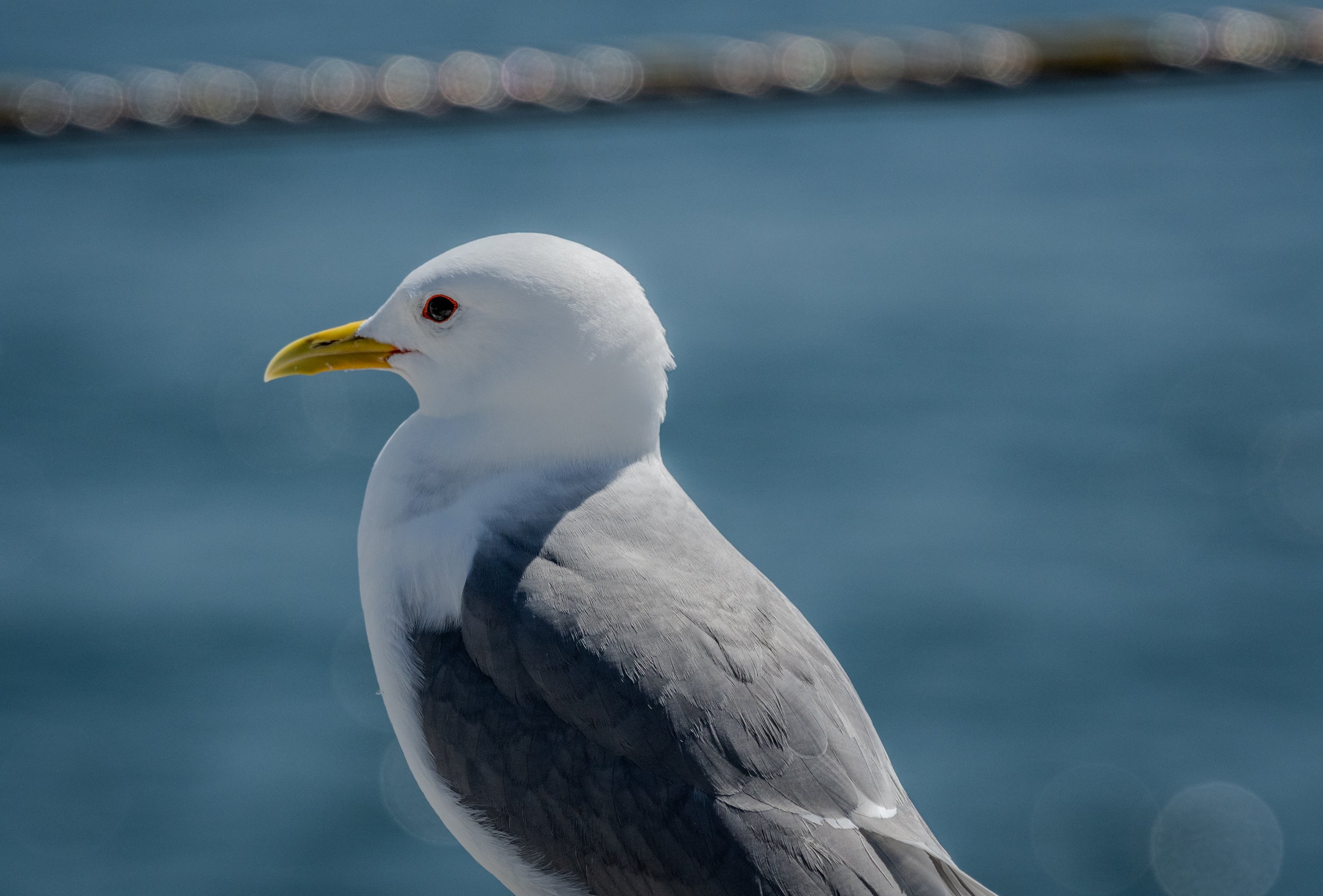
Cast a Light Photography© by Matthew Shaw
Nikon D500, Nikon AF-S Nikkor 200-500 f/ 5.6 ED VR
300mm, 1/4000 sec, f/7.1, ISO 560, processed in Adobe Lightroom
Set to stun!
Even before landing on the island, I had already dialled in my camera settings. My advice to anyone is to be prepared for action. Get all the fiddling and twiddling of dials out of the way early on. This frees you up to focus on observing and composing.
As an outdoor photographer, I tend to shoot in Manual mode with Auto ISO. Since available light can change in the blink of an eye, I leave ISO adjustment to the camera. Unlike shutter speed and aperture, ISO is the only variable of the exposure triangle that does not affect the creative aesthetic of the final image.
Eagle eyes will notice that all 3 of the photographs that feature in this blog post were taken using the same shutter speed. Although my subjects were not always erratic in their movement, the bright sunlight gave me confidence that I could get away with 1/4000 second (lightening quick!) without the ISO ever going too high. Best to be ready for action should it happen.
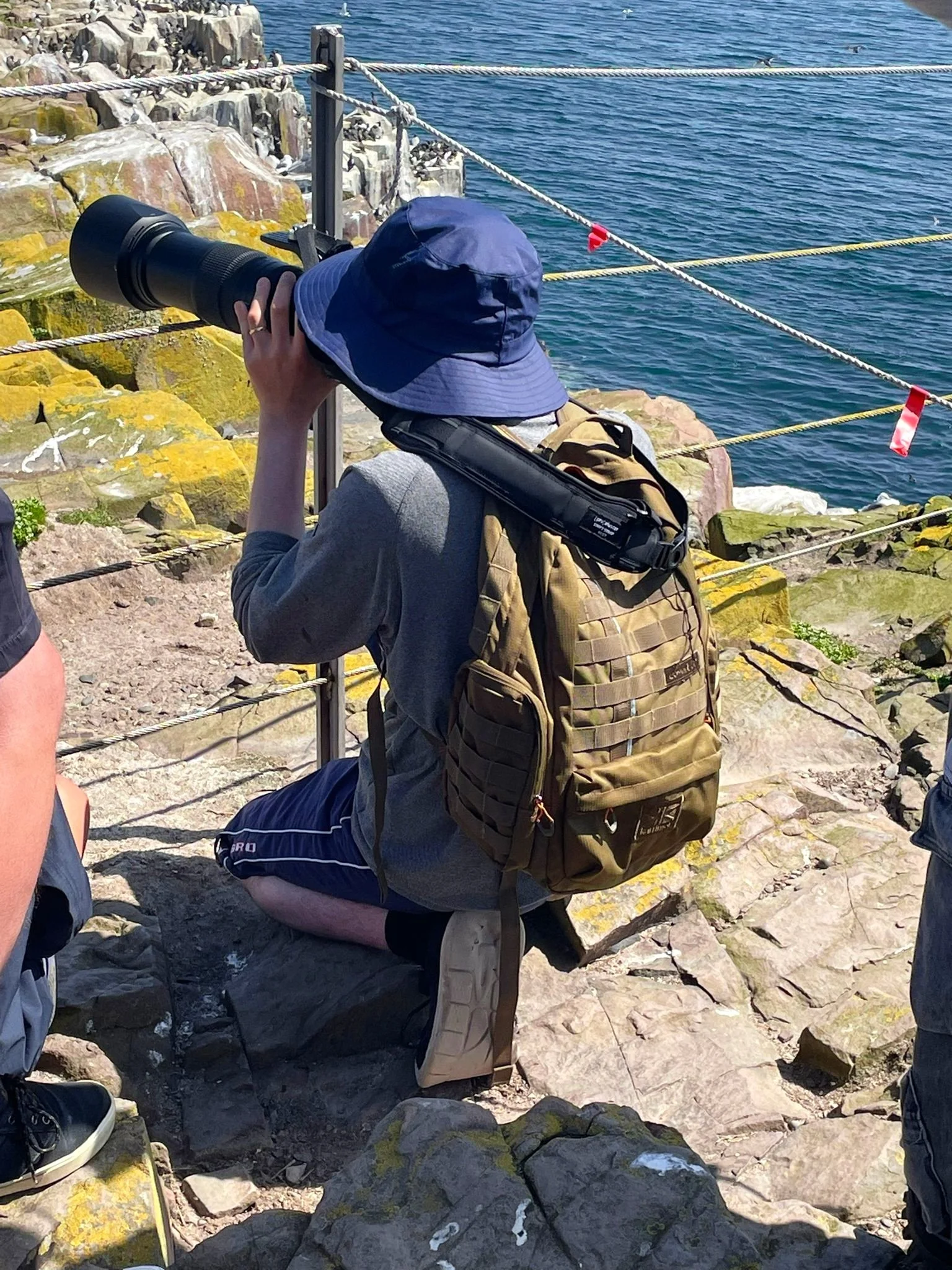
Above: me in action!
Photo credits to my wonderful wife whose knowledge of photography is second only to mine.
Heaven knows, I do enjoy lecturing her on the subject.
Wildlife photography tip:
Looking around, it baffled me how many photographers with professional-grade gear were shooting down at the top of birds’ heads. One lady was even doing so whilst her camera was locked off on a tripod at full extension!
Rule #1: Get at their level!
Trust me on this one. It makes for a far more compelling photograph.
The challenges of photography in sunny weather
Outdoor photographers swear by the magical light of “Golden Hour” and “Blue Hour” - the relatively short period of time around sunrises and sunsets. By contrast, shooting in full sun is the stuff of nightmares for most of us; the harsh light kills colour saturation and vibrancy, blows out highlights, and does nothing to flatter our subjects. But what if you don’t have the luxury of choosing which time to shoot?
The simple facts are as follows:
I went for the puffins.
May to July is their season.
Our tour operator offered landings until 3 p.m. With UK sunset times in May varying between 8:20 p.m. to 9.20 p.m and sunrises as early as 4:50 a.m., I could wave goodbye to any hope of soft and diffused illumination. The blue, cloudless sky was equally unimaginative. But it was all I had.
Work with what you have…
Did I bag the best photos the world has ever seen? No.
Do I care? No.
Did I have fun? Yes!
I have previously returned to locations time and time again in the hope of capturing an inspiring scene in the best possible light. After all, the word “photography” translates from the Greek as “drawing with light”. But when you don’t have the luxury of time, in the words of Prince Phillip, “Just take the ****ing picture!”.